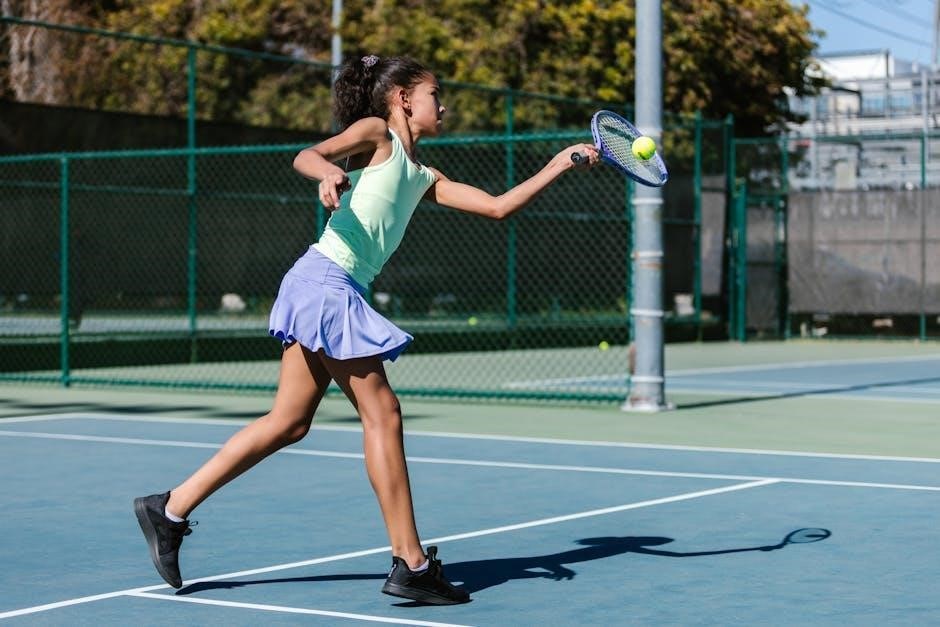
junior tennis racquet size guide
Navigating the world of junior tennis requires careful consideration, and selecting the correct racquet size is paramount for a young player’s development and enjoyment of the sport.
Why Racquet Size Matters for Young Players
Choosing the appropriate racquet size is crucial because it directly impacts a junior player’s ability to learn proper technique and develop their skills effectively. A racquet that is too large or too heavy can hinder their swing development, leading to poor form and potential injuries. Conversely, a racquet that is too small might lack the necessary power and control for them to progress.
Proper racquet sizing allows young athletes to generate adequate ball speed, maintain control, and build a solid foundation for future success. It fosters confidence and encourages a love for the game, as they experience positive results from their efforts. Ultimately, the right size empowers them to enjoy the learning process and reach their full potential on the court.
The Impact of Incorrect Racquet Size on Development
Utilizing an improperly sized racquet can significantly impede a junior player’s development, fostering bad habits and increasing the risk of injury. An oversized racquet can be unwieldy, preventing proper swing mechanics and hindering the development of wrist strength and control. This can lead to compensations that strain other muscle groups.
Conversely, a racquet that’s too small may lack the necessary power, making it difficult to hit with depth and consistency. This can discourage young players and limit their ability to compete effectively. Long-term, incorrect sizing can contribute to chronic pain and hinder the development of a well-rounded tennis game, ultimately impacting their enjoyment and progress.
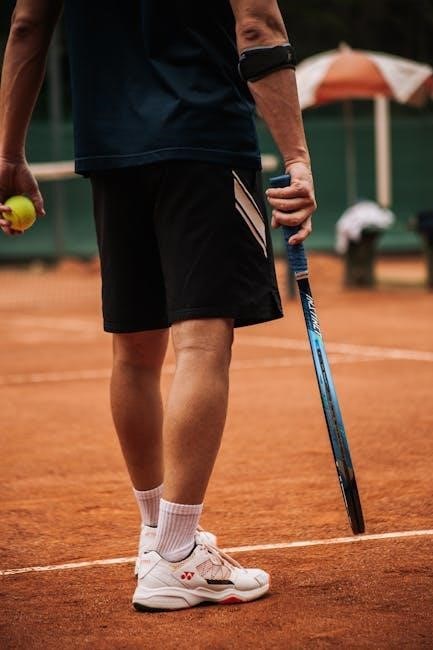
Understanding Racquet Components
Key elements like head size, weight, and grip size profoundly influence a junior’s ability to control the racquet and generate power effectively on the court.
Head Size and its Influence on Power and Control
The head size of a junior tennis racquet significantly impacts a player’s game, influencing both power generation and control. Larger head sizes, typically ranging from 100 to 110 square inches, offer a bigger sweet spot, making it easier for young players to make solid contact with the ball. This translates to more power with less effort, which is beneficial for developing players.
However, a larger head size can sometimes compromise control, as it provides less precision on off-center hits. Conversely, smaller head sizes (around 90-98 square inches) offer greater control and accuracy, but require more precise technique and a more developed swing to generate sufficient power. For beginners, a larger head size is generally recommended to build confidence and develop a feel for the game, while more advanced juniors may benefit from a smaller head size to refine their control and shot-making abilities.
Weight: Finding the Right Balance for Juniors
Racquet weight is a crucial factor in junior tennis, directly affecting maneuverability, swing speed, and overall control. Heavier racquets provide more stability and power, but can be difficult for younger players to swing effectively, potentially hindering technique development. Lighter racquets, on the other hand, are easier to maneuver and promote faster swing speeds, allowing juniors to generate more spin and control.
Generally, lighter racquets (between 8-9 ounces) are recommended for beginners and younger players, while more advanced juniors can gradually transition to slightly heavier racquets (9.5-10.5 ounces) as their strength and technique improve. Finding the right balance is key – a racquet that’s too heavy will be cumbersome, while one that’s too light may lack stability and power. Consider the player’s physical strength and skill level when selecting a racquet weight.
Grip Size: Ensuring a Comfortable and Secure Hold

A proper grip size is fundamental for comfort, control, and injury prevention in junior tennis. An incorrectly sized grip can lead to a tight grip, causing tension in the wrist and forearm, potentially resulting in tennis elbow or other overuse injuries. Conversely, a grip that’s too large can limit wrist movement and reduce feel for the ball.
Grip sizes are typically measured in inches and range from 4 1/8″ to 4 5/8″. Younger players generally require smaller grips (4 1/8″ ⸺ 4 1/4″), while older or stronger juniors may need larger grips (4 3/8″ ⸺ 4 5/8″). A simple test involves checking the space between the fingertips and the palm when gripping the racquet – there should be a small gap. Overgrips can be used to customize the grip size further, ensuring a comfortable and secure hold.
Age and Height-Based Sizing Guidelines
Generally, racquet size correlates with a junior player’s age and height, offering a starting point for selection, though individual development varies considerably.
Racquet Sizes for Beginners (Ages 5-8)
For the youngest beginners, aged 5-8, the primary goal is to develop fundamental skills and a love for the game, not power or precision. Racquets in this age group typically range from 19 to 23 inches in length. A shorter racquet allows for easier swinging and better control, crucial for building proper technique; Weight is also a significant factor; lighter racquets, generally under 200 grams, are recommended to prevent strain and encourage fluid motion.
Head sizes are often larger in this range, around 90-100 square inches, providing a generous sweet spot for consistent contact. Grip sizes should be small enough to allow a comfortable, non-slip hold without excessive squeezing. Focus on racquets specifically designed for this age group, as adult racquets will be too heavy and difficult to maneuver, potentially hindering development and discouraging participation. Prioritize fun and building a solid foundation over immediate performance gains.
Intermediate Players (Ages 9-12): Selecting the Appropriate Size
As players progress to the 9-12 age range, their strength and coordination increase, allowing for a transition to slightly larger and heavier racquets. Racquet lengths typically fall between 23 and 26 inches. Weight should gradually increase, aiming for racquets around 210-240 grams, enabling more power and stability without compromising maneuverability. Head sizes can remain similar to the beginner range (95-105 square inches) or slightly decrease as control becomes more important.
Grip size is crucial; a proper fit prevents injury and enhances feel. Players should be able to comfortably wrap their hand around the grip with a small space between their fingertips and palm. Consider the player’s physical development and playing style when selecting a racquet. More athletic players might benefit from a slightly heavier racquet, while those still developing strength may prefer a lighter option.
Advanced Junior Players (Ages 13+): Transitioning to Adult Racquets
For advanced players aged 13 and above, the transition towards adult racquet specifications begins. Many will start experimenting with full-size (27-inch) racquets, though lighter adult models are recommended initially. Weight ranges typically increase to 250-280 grams, fostering greater power and control for competitive play. Head sizes often decrease to 98-100 square inches, prioritizing precision and spin generation.
Grip size becomes increasingly individualized, requiring careful measurement to ensure optimal comfort and performance. Players should focus on finding a racquet that complements their playing style and physical attributes. This stage often involves demoing various racquets to identify the best fit. A gradual transition is key, allowing the player to adapt to the increased weight and different balance point.

Measuring a Junior Player for a Racquet
Accurate measurements are crucial for selecting the appropriate racquet size, ensuring optimal performance and preventing injury during play and development.
The Arm Length Measurement Method
To determine the ideal racquet length, the arm length measurement method is highly recommended. Have the player stand with their arm extended straight out to the side, as if holding a racquet. Measure from the center of their palm to the ground. This measurement, in inches, will correspond to a recommended racquet length range.
Generally, players with arm lengths between 48-52 inches may benefit from a 21-inch racquet, while those with 53-57 inches could use a 23-inch racquet. Players measuring 58-60 inches might consider a 25-inch racquet. It’s important to remember this is a guideline, and other factors like skill level and strength should also be considered. This method provides a solid starting point for finding a comfortable and effective racquet size, promoting proper technique and preventing strain.
Using Height as a Secondary Guide
While arm length is the primary determinant, a player’s height serves as a valuable secondary guide when selecting a junior tennis racquet. Height can offer a quick reference, especially when an accurate arm length measurement isn’t immediately available. Generally, children under 4’0” often start with an 18-21 inch racquet.
Players between 4’0” and 4’6” typically use a 21-23 inch racquet, while those ranging from 4’6” to 5’0” often find a 23-25 inch racquet suitable. For players taller than 5’0”, a 25-26 inch racquet, or even a lightweight adult racquet, may be appropriate. Remember, these are approximate suggestions; individual strength, skill level, and swing style should always be prioritized for optimal performance and injury prevention.
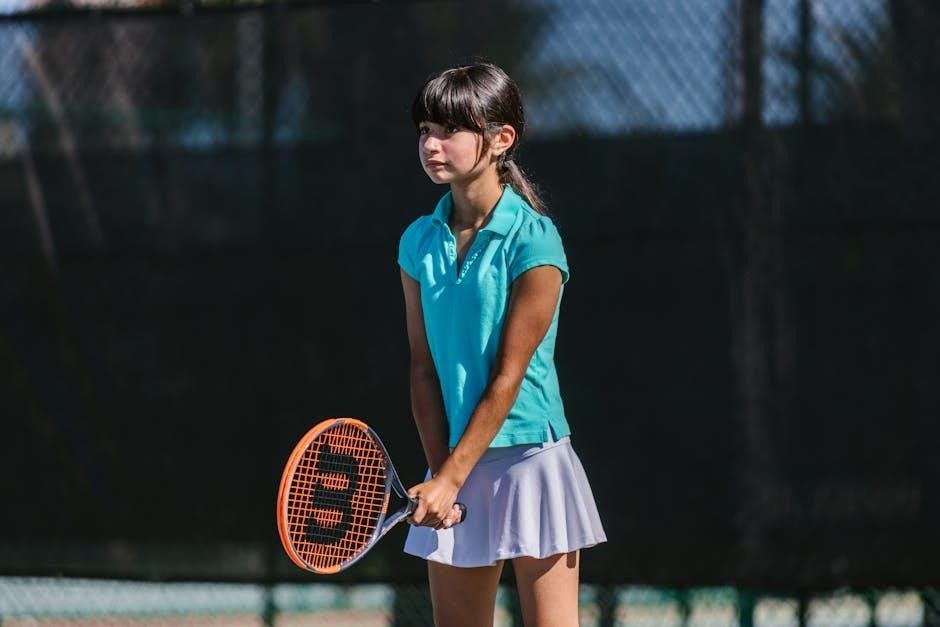
Racquet Length Considerations
Racquet length significantly impacts a junior player’s game; shorter racquets enhance maneuverability, while longer ones provide increased reach and potential power.
Shorter Racquets for Easier Handling
For younger or less developed players, shorter racquets – typically ranging from 19 to 23 inches – are incredibly beneficial. These racquets boast a lighter weight and a smaller swing path, making them significantly easier to control and maneuver. This is crucial for building proper technique and developing fundamental strokes without overwhelming the child. A shorter length allows for quicker racquet head speed, which can translate to more effective shots, even with less developed strength.
The reduced weight also minimizes strain on developing muscles and joints, preventing potential injuries. Beginners will find it easier to make consistent contact with the ball, fostering confidence and a positive learning experience. Ultimately, a shorter racquet prioritizes technique development and enjoyment, laying a solid foundation for future growth in the sport.
Longer Racquets for Increased Reach and Power
As junior players mature and their physical strength increases, transitioning to longer racquets – generally between 25 and 27 inches – becomes advantageous. These racquets provide a larger sweet spot and increased leverage, enabling players to generate more power on their shots. The extended reach is particularly beneficial for covering more of the court and effectively returning serves and overheads.
However, it’s vital to ensure the player possesses sufficient strength and technique to handle the added weight and length. A longer racquet demands more controlled swings and a stronger core to maintain stability. This transition typically occurs during the intermediate to advanced stages of development, allowing players to capitalize on their growing athleticism and refine their competitive edge.
Choosing Between Different Racquet Materials
Selecting the right material impacts performance; aluminum offers affordability, while graphite provides a superior blend of power, durability, and feel for developing players.
Aluminum Racquets: A Budget-Friendly Option
For beginners or players just starting their tennis journey, aluminum racquets present an excellent and economical choice. These racquets are notably more affordable than those constructed from graphite or composite materials, making them a practical option for families mindful of costs. While aluminum racquets may not offer the same level of performance or feel as higher-end materials, they are incredibly durable and can withstand the wear and tear associated with learning the game.
The heavier weight of aluminum frames can actually be beneficial for young players developing their swing, aiding in the generation of power. However, this increased weight can also make them less maneuverable. Aluminum racquets are a fantastic starting point, allowing children to learn proper technique without a significant financial investment, and are readily available in appropriate sizes for various age groups.
Graphite Racquets: Performance and Durability
As junior players progress and their skills develop, transitioning to graphite racquets becomes a worthwhile investment. Graphite offers a superior combination of performance characteristics compared to aluminum, including increased stiffness for enhanced power and a lighter overall weight for improved maneuverability. This allows young athletes to generate faster swing speeds and react more quickly on the court.

While generally more expensive than aluminum, graphite racquets provide excellent durability, capable of withstanding rigorous play. The lighter weight reduces strain on developing muscles, promoting proper technique and preventing injuries. Graphite’s vibration-dampening properties also contribute to a more comfortable playing experience. Selecting a graphite racquet signals a commitment to the sport and supports a player’s continued growth and competitive advancement.
Where to Buy Junior Tennis Racquets
Finding the perfect racquet is easy through numerous online retailers and specialty tennis shops, offering diverse options and expert guidance for parents.
Online Retailers
Numerous online retailers provide a convenient and extensive selection of junior tennis racquets. These platforms often feature detailed product descriptions, customer reviews, and comparison tools, aiding parents in making informed decisions. Popular options include Tennis Warehouse, Amazon, and Dick’s Sporting Goods, each offering a wide range of brands, sizes, and price points.
The benefit of online shopping lies in the ability to browse at your own pace and compare prices easily. Many retailers also offer free shipping and hassle-free return policies, ensuring customer satisfaction. However, it’s crucial to carefully review the specifications and consider the player’s individual needs before purchasing. Utilizing online sizing guides and consulting with a tennis professional can further refine the selection process, guaranteeing a suitable racquet for optimal performance and enjoyment.
Specialty Tennis Shops
Local specialty tennis shops offer a personalized experience that online retailers often can’t match. Knowledgeable staff can provide expert advice on racquet sizing, weight, and grip size, tailored to the individual junior player’s skill level and physical attributes. These shops frequently offer demo programs, allowing players to test different racquets before committing to a purchase.
This hands-on approach is invaluable, ensuring a proper fit and maximizing comfort and performance. Specialty shops also provide professional racquet stringing and customization services. While potentially more expensive than online options, the expertise and personalized service offered by these stores can be a worthwhile investment in a young player’s tennis development, fostering a love for the game with the right equipment.